The Central Nervous System (CNS) is the body’s main command center, consisting of the brain and the spinal cord. It is responsible for processing information, controlling bodily functions and coordinating responses to stimuli by integrating sensory input and sending motor commands throughout the body.
The brain handles complex tasks like thinking, movement,and memory, while the spinal cord acts as the communication highway between the brain and the peripheral nerves. The CNS is protected by bone (skull for the brain, vertebrae for the spinal cord) and cushioned by meninges and cerebrospinal fluid (CSF).
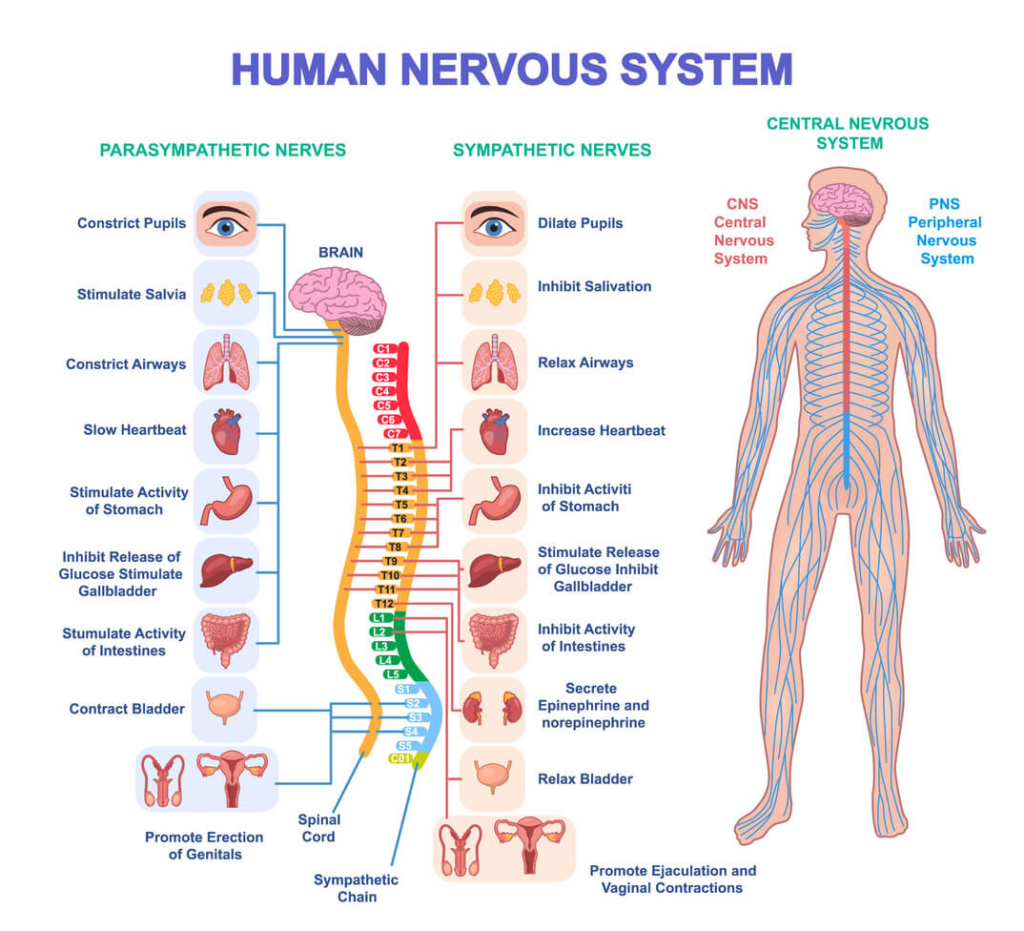
Psychiatry is fundamentally a discipline of clinical neuroscience, making it an integral part of the study and function of the central nervous system (CNS). Mental illnesses are recognized as brain disorders, arising from dysfunctions in the brain’s complex circuitry and neurochemical processes.
Conditions of the Central Nervous System
Several conditions can affect your central nervous system. Some of the most common include:
- Alzheimer’s disease
- ALS
- MS
- Brain Tumor
- Spinal cord Trauma
- Stroke
- Traumatic Brain Injury
Signs & Symptoms of Central Nervous System Conditions
You might experience the following:
- Loss of consciousness.
- Muscle weakness or paralysis
- Dizziness
- Confusion and/or memory loss.
- Involuntary movements (muscle twitch)
- Headache
- Pain, tingling or numbness in your arms or legs
- Seizures
Contact emergency services immediately if you or a loved one experience symptoms of a stroke like confusion and paralysis on one side of your body. It’s also important to get medical help if you experienced an injury to your head that affects your vision, memory and/or awareness.