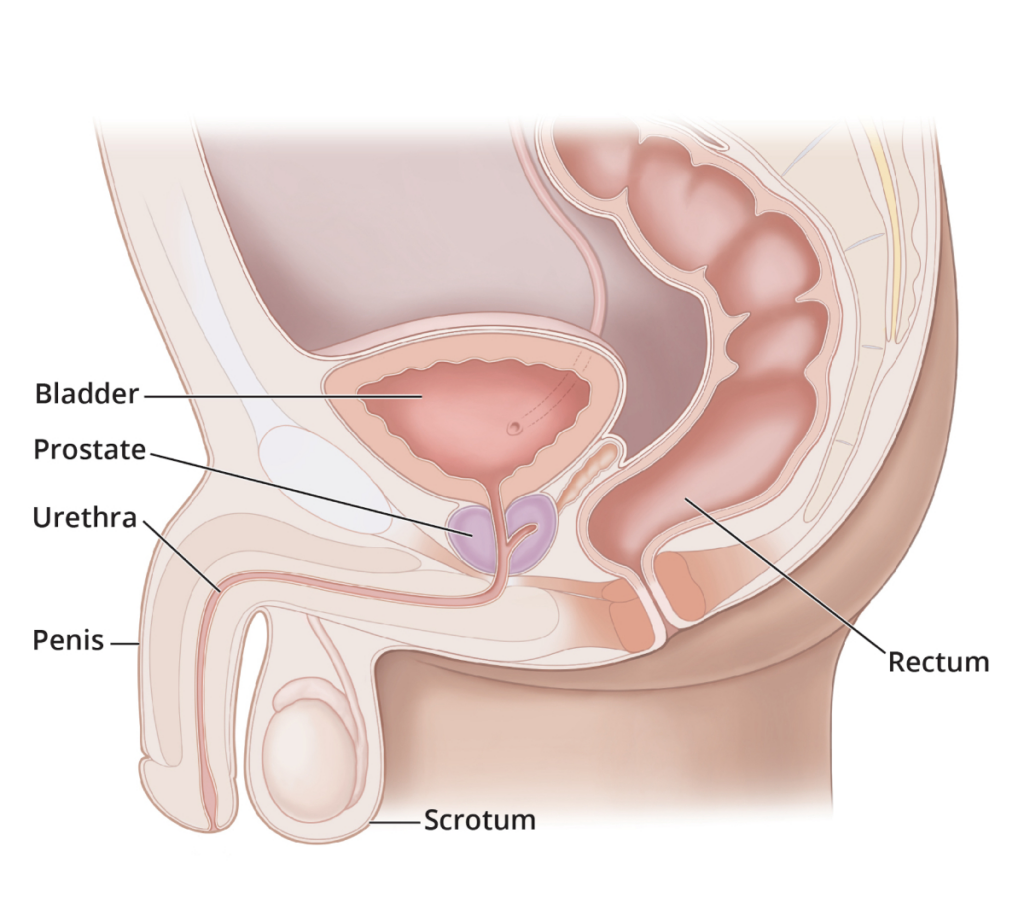
Prostate enlargement, or benign prostatic hyperplasia (BPH), is a non-cancerous growth of the prostate gland that squeezes the urethra. It causes urinary symptoms like a weak stream, waking up at night to pee, and trouble starting. It is very common in older men and can be managed with lifestyle changes, medicine, or surgery.
Common Signs
- Weak or slow pee stream
- Need to go often, especially at night
- Sudden, strong urge to pee
- Trouble starting to pee
- Feeling like your bladder is not empty [1]
Main Causes and Risks
- Getting older (very common after age 50)
- Hormone changes in the body over time
- Family history of BPH
- Health habits like lack of exercise or high weight
Care Options
- Surgery: Procedures to clear blocked flow when pills do not work
- Watchful waiting: Regular checks if signs do not bother you much
- Meds: Pills to relax muscles or shrink the gland
- Using Gambian Foods & Evidence‑Based Herbs
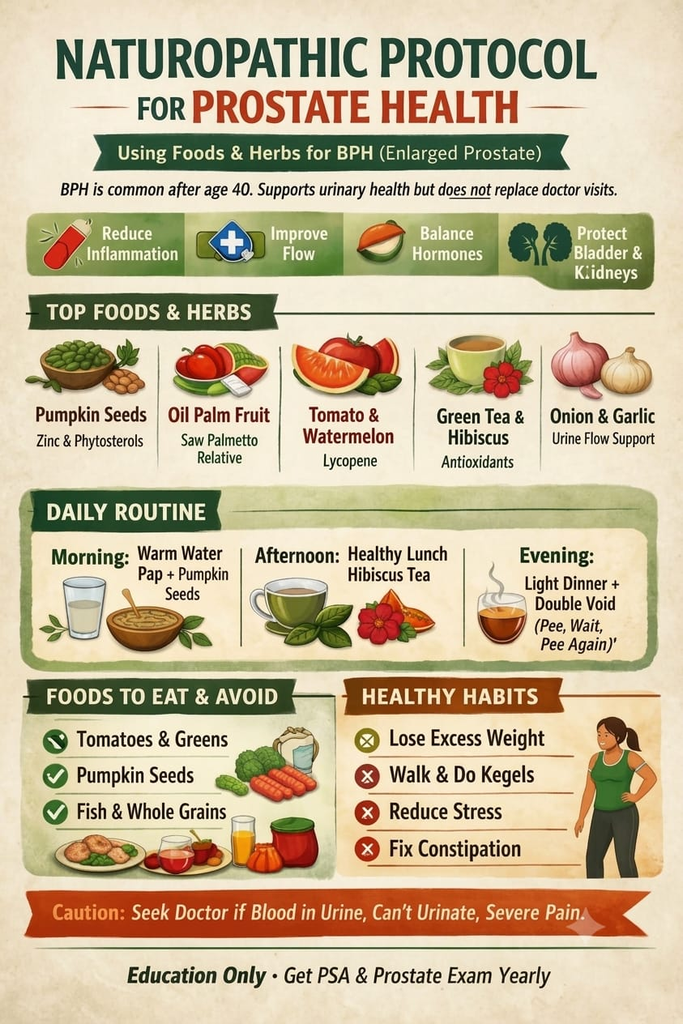
This protocol uses locally available Gambian foods and herbs to support prostate and bladder health:
Why It Matters
The prostate surrounds the urethra; when enlarged, it compresses urine flow. Chronic inflammation, hormonal imbalance (excess DHT), and oxidative stress contribute to symptoms. Nutrition and lifestyle can help reduce these factors.
Core Goals
- Reduce inflammation of the prostate
- Relax bladder and prostate muscles for better flow
- Balance hormones to limit DHT conversion
- Protect bladder and kidneys from strain
Gambian Foods & Herbs That Help
- Pumpkin Seeds (Taneh): Rich in zinc and phytosterols; may reduce prostate size.
- Oil Palm Fruit: Traditional anti‑inflammatory; similar to saw palmetto.
- Tomato & Watermelon: Lycopene protects prostate cells.
- Green Tea & Hibiscus (Ataya + Bissap): Antioxidants and gentle diuretics.
- Onion & Garlic (Yab + Ayo): Quercetin compounds improve urine flow. Bonus: Bitter Leaf (Shiwaka), Moringa (Nebedaye), and Nettle Leaf support hormonal and inflammatory balance.
Daily Routine
- Morning: Warm water, pap or fonio with pumpkin seeds and baobab; short walk.
- Afternoon: Balanced meal with fish and greens; hibiscus tea; avoid bladder irritants.
- Evening: Light soup dinner; palm oil or palm nut soup twice weekly; urinate regularly; limit fluids before bed.
Eat More / Avoid
- ✅ Zinc‑rich foods, cooked tomatoes, greens, fiber, healthy fats.
- ❌ Excess dairy, red meat, salt, alcohol, caffeine, sugar, and late‑night fluids.
Lifestyle Habits
- Maintain healthy weight
- Walk 30 minutes daily + Kegel exercises
- Manage stress and constipation
- Keep warm; avoid cold surfaces
Safety
- Monitor urine flow and nighttime frequency.
- Seek medical care if you notice blood in urine, fever, severe pain, or inability to urinate.
- Get PSA test and prostate exam yearly after age 45.