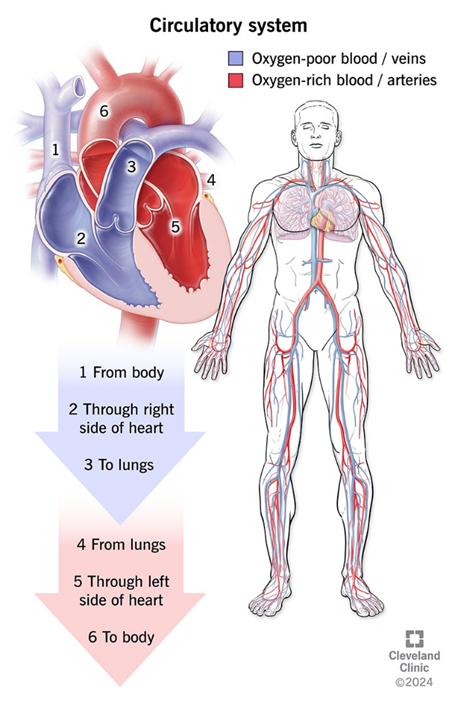
The cardiovascular system consists of the heart, veins, arteries, and capillaries. These components make up two circulatory systems: the systemic and pulmonary circulatory systems.
The systemic circulatory system is the main blood circulatory system that transports blood to the organs, tissues, and cells throughout the body. The pulmonary circulatory system moves blood between the heart and lungs where oxygen enters the blood and carbon dioxide leaves the blood.
The main function of the cardiovascular system is to bring oxygen-rich blood to all parts of the body and carry deoxygenated blood back to the lungs. The blood also transports nutrients, hormones, immune factors and waste products through the body.
Abnormalities or injuries to any part of the cardiovascular system can result in serious health-complications such as coronary artery disease, heart attack and stroke.