Hemorrhoids are swollen veins in the anal canal and lower rectum, similar to varicose veins. They happen when the normal “anal cushions” become enlarged and displaced.
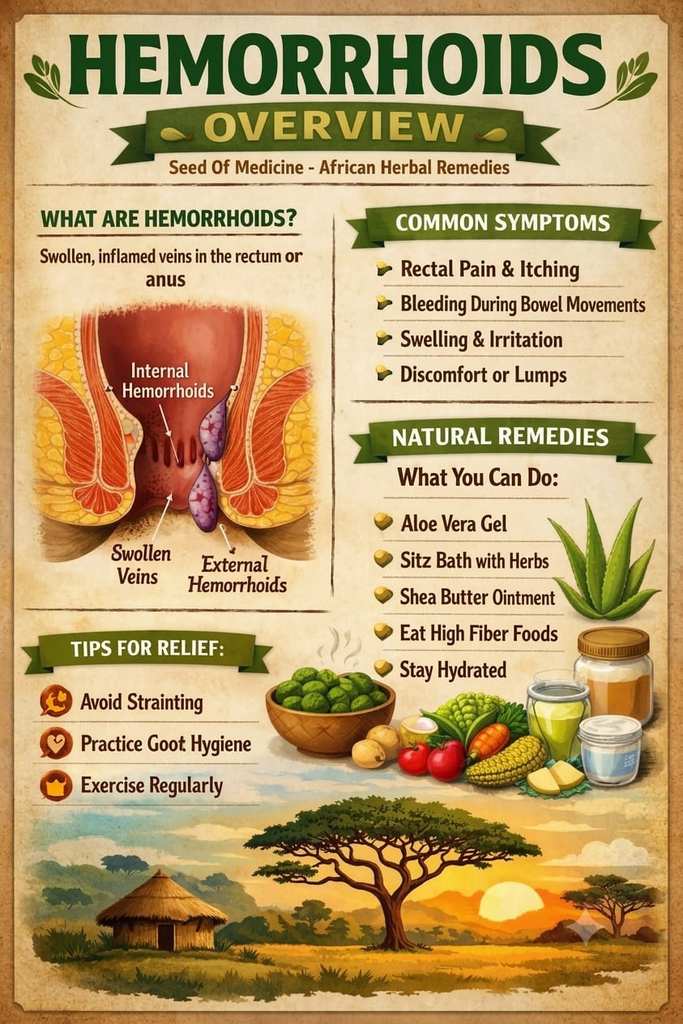
Types of Hemmorhoids:
- Internal: inside the rectum. Usually painless, but can cause bright red bleeding with bowel movements.
- External: under the skin around the anus. Can cause pain, swelling, itching.
- Prolapsed: internal ones that bulge out.
- Thrombosed: a blood clot forms, causing severe pain and a hard lump.
How common About 50-66% of people get them at some point. In the US, ∼10 million people are affected. Most common between 45-65 years.
Main causes & Risk factors The exact cause isn’t fully known, but pressure on rectal veins is key. Contributing factors include:
- Chronic constipation or diarrhea, straining
- Sitting on toilet a long time
- Pregnancy, aging, heredity, being overweight
- Overuse of laxatives/enemas
Pathophysiology involves abnormal dilation of vascular channels + weakening of supporting connective tissue.
Common symptoms Bleeding during bowel movements, protrusion, itching, pain, sensitive lump. Internal ones often present with painless bleeding. e6bcf447
Conventional Treatment Approach
- Lifestyle/first-line: high-fiber diet 25-35g/day, more water, avoid straining, limit toilet time to 1-2 min, warm sitz baths 10-20 min.
- Medications: topical anti-inflammatories, stool softeners, oral venotonic drugs like flavonoids.
- Office procedures: rubber band ligation, sclerotherapy.
- Surgery: hemorrhoidectomy or stapled hemorrhoidopexy for severe cases.
Important: Check with a healthcare professional first, because rectal bleeding can also be from other conditions.
Naturopathic / Holistic approach with West African herbs In West African traditional medicine, hemorrhoids are managed holistically: reduce inflammation, stop bleeding, soften stools, strengthen vein tone, and promote healing. Many plants used have documented anti-inflammatory, venotonic, and astringent properties.
Herbs commonly cited in West Africa for piles:
From Nigeria and surrounding regions:
- Anacardium occidentale – cashew bark
- Mangifera indica – mango stem bark
- Spondias mombin – iyeye leaves
- Enantia chlorantha – awopa bark
- Xylopia aethiopica – eru alamo fruit
- Newbouldia laevis – akoko leaves
- Psidium guajava – guava root
- Moringa oleifera – leaves
- Alstonia boonei – ahun bark
- Aframomum melegueta – ataare seed pod
- Zingiber officinale – ginger
From other African ethnobotanical studies:
- Phyllanthus amarus – most cited in Lubumbashi, DRC for internal hemorrhoids
- Uapaca guineensis – used for hemorrhoids in DRC
- Zanthoxylum chalybeum – decoction used for hemorrhoid
- Vernonia shirensis – used for hemorrhoid, headache, diarrhea
- Cissus quadrangularis – indigenous to Africa/Asia, shown to have analgesic, anti-inflammatory and venotonic activities; administration reduced hemorrhoid magnitude and pain
- Syzygium guineense – paste of whole plant applied to stop bleeding
Traditional Preparation Methods in West Africa
- Leaves are the most used part.
- Decoction/Infusion: boiling bark, roots or leaves and drinking the tea. Example: Ginger, Zanthoxylum
- Topical application/paste/liniment: crushed leaves mixed with honey or oil and applied to the area.
- Soap concoction “tokar sha”: dissolved in cold water, taken orally in northwest Nigeria for piles
Why these may help – Proposed mechanisms Natural products are being studied for coagulation support, anti-inflammatory, antibacterial, and tissue regeneration activities.
Examples:
- Cissus quadrangularis: anti-inflammatory + venotonic, may reduce swelling and pain
- Ocimum gratissimum: studies suggest scientific basis for traditional management of hemorrhoids
- Boswellia species: gum resin with boswellic acids, anti-inflammatory
Holistic naturopathic plan that combines science + West African herbs
- Diet & bowel care: High fiber foods + water to make stools soft and bulky. This aligns with both modern and traditional advice.
- Herbal support: Use astringent/anti-inflammatory herbs as teas or sitz baths. Example: guava root tea, mango bark decoction, or warm sitz bath with Newbouldia laevis leaves.
- Topical care: Apply pastes of Syzygium guineense or leaf poultices to reduce itching and bleeding.
- Lifestyle: Avoid prolonged sitting, straining. Gentle movement helps circulation.
Safety notes
- Many plants are still under study. Phytochemical and pharmacological properties need more research.
- Some preparations involve roots/bark harvesting which can threaten wild plants.
- Herbs can interact with medications. If bleeding is heavy, lasts >1 week, or you have dizziness, seek emergency care.
Bottom Line: Haemorrhoids are very common and usually not serious. Conventional care focuses on fiber, fluids, and reducing pressure. West African herbal traditions add plants with astringent, anti-inflammatory, and venotonic properties that have been used for generations, and some are now being studied in labs.