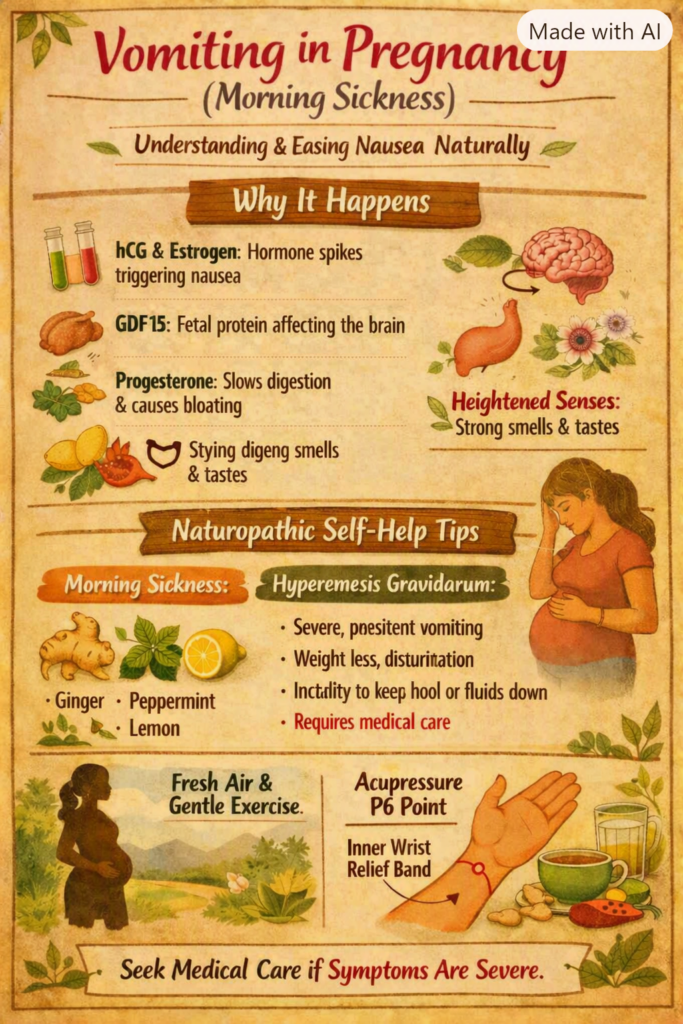
Pregnancy nausea and vomiting, commonly called morning sickness, affects up to 90% of pregnant women. It typically begins between the 4th and 8th week of gestation, peaks during the first trimester, and often resolves by week 16 to 20.
Common Signs and Triggers
- Starts between weeks 4 and 8.
- Can happen at any time of day, not just the morning.
- Linked to rising pregnancy hormones like hCG and estrogen.
- Triggered by strong smells, heat, or empty stomachs.
Management and Relief Options
- Eat small, frequent meals of dry or bland foods (crackers, toast).
- Stay hydrated with small, regular sips of water or ginger tea.
- Avoid spicy, fatty, or heavy foods.
- Use ginger supplements or acupressure wristbands.
- Consult a doctor about safe options like Vitamin B6 if needed.
When to Seek Immediate Help
- Significant weight loss (more than 5% of body weight).
- Severe, relentless vomiting (hyperemesis gravidarum).
- Inability to keep any food or liquids down for 24 hours.
- Signs of dehydration like dark urine, dizziness, or fainting.
Hyperemesis Gravidarum (HG) is an extreme pregnancy complication marked by severe, persistent nausea and vomiting that typically starts before week 16. Unlike normal morning sickness, HG causes major weight loss (over 5% of pre-pregnancy weight), severe dehydration, and electrolyte imbalances that often require medical treatment or hospital care.
Key Signs and Symptoms
- Vomiting more than three times a day
- Inability to keep any food or liquids down
- Weight loss of 5% or more
- Dizziness, fainting, and dark urine from dehydration
- Extreme tiredness and low blood pressure
Common Treatments
- Intravenous (IV) fluids to restore hydration and electrolytes
- Anti-sickness prescription medications (such as vitamin B6 combined with doxylamine, or anti-emetics like metoclopramide and ondansetron)
- Eating small, bland meals and avoiding strong sensory triggers when tolerated
- Tube feeding in severe, resistant cases to ensure basic nutrition