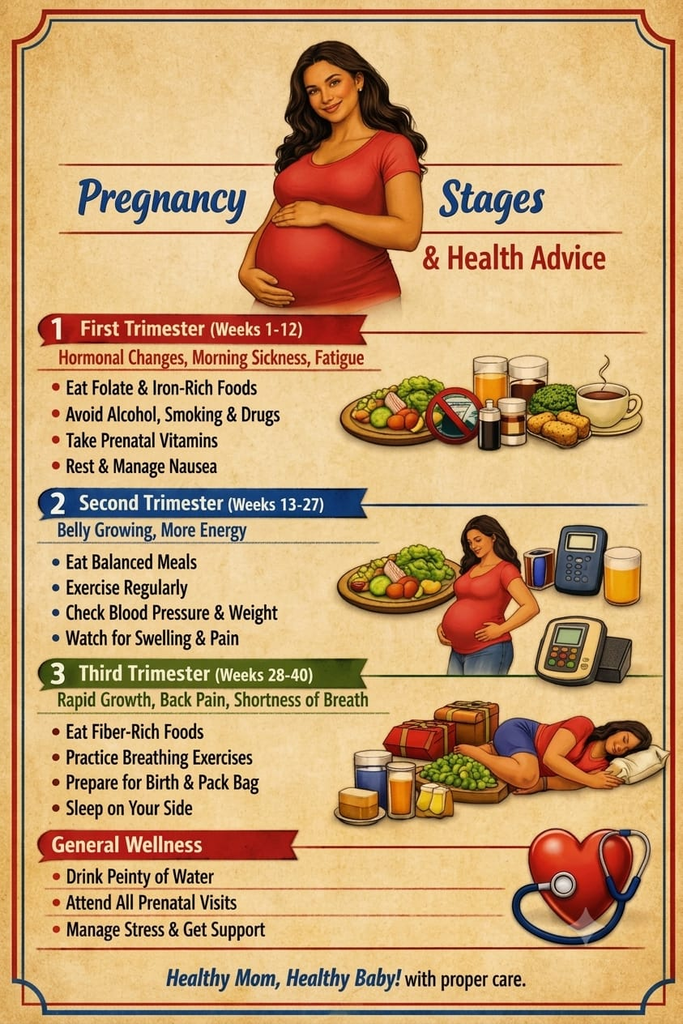
Pregnancy lasts about 40 weeks and is split into three trimesters. Key stages involve rapid fetal growth and body changes, requiring solid nutrition, routine medical checkups, and symptom management for a healthy journey.
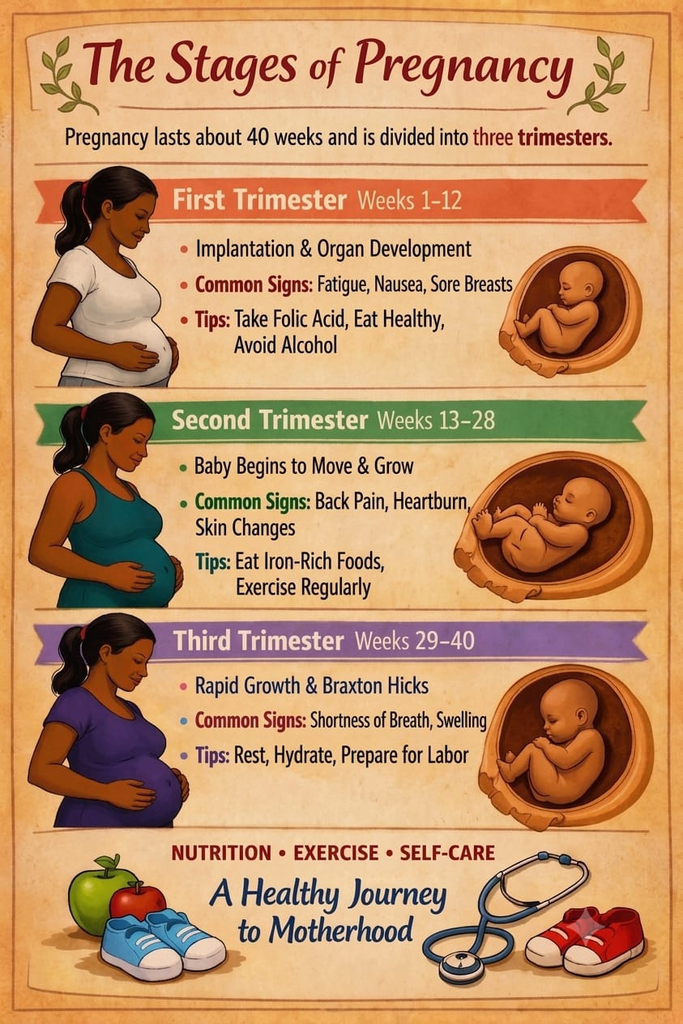
First Trimester (Weeks 1–12)
- What happens: The embryo implants and develops major organs.
- Common signs: Extreme tiredness, sore breasts, morning sickness, and frequent bathroom trips.
- Health tips: Take daily folic acid (400–800 mcg) to prevent neural tube defects, eat small and bland meals to cope with nausea, and avoid raw foods, high-mercury fish, and alcohol.
Second Trimester (Weeks 13–28)
- What happens: Nausea often fades, the fetus moves, and the belly grows visibly.
- Common signs: Body aches, skin darkening, and heartburn.
- Health tips: Eat iron-rich foods, stay active with safe exercises like walking, and attend routine prenatal screenings (such as anatomy scans or gestational diabetes tests).
Third Trimester (Weeks 29–40)
- What happens: The fetus gains weight fast, practice contractions (Braxton Hicks) start, and the body prepares for labor.
- Common signs: Trouble sleeping, back pain, and shortness of breath.
- Health tips: Rest often, watch for signs of true labor, keep hydrated, and finalize your birth plan with your midwife or doctor.
Complications of Pregnancy:
- Pregnancy Related Hypertension
- Pregnancy Related Diabetes
- Exessive Nausea & Vomiting (Hyperemesis Gravidarum)